Article Overview
Hollow-core optical fibers offer high-speed, low-latency transmission but carry risks such as fragility, contamination sensitivity, splicing difficulties, and limited commercial maturity.
Fragility and Mechanical Sensitivity
Hollow-core fibers have a central air-filled core surrounded by delicate microstructured cladding, making them more fragile than conventional solid-core fibers. The thin glass structures can be easily damaged during handling, installation, or bending, which may lead to micro-cracks or breakage that compromise performance and increase attenuation .
Contamination and Gas Sensitivity
HCFs rely on an air or gas-filled core for light propagation. Contaminants such as dust, moisture, or impurities in the filler gas can significantly increase optical losses and reduce transmission efficiency. Maintaining a clean environment during splicing, installation, and operation is critical to prevent degradation .
Splicing and Integration Challenges
Unlike solid-core fibers, HCFs require specialized splicing techniques to avoid damaging the photonic cladding. Standard fusion splicing can destroy the delicate microstructures, leading to high insertion loss or fiber failure. This makes integration with existing fiber networks more complex and costly .
Attenuation and Performance Limitations
Although HCFs can achieve lower nonlinear effects and faster light propagation, current designs still face higher attenuation than ideal solid-core fibers in some wavelength ranges. Variability in manufacturing and sensitivity to bending or environmental changes can further affect performance .
Limited Commercial Maturity
Hollow-core fibers are still in the development and trial stage for most applications beyond specialized low-latency links. This means that long-term reliability, standardized deployment practices, and large-scale availability are limited, which can pose risks for widespread adoption .
Environmental and Operational Considerations
HCFs may be more sensitive to temperature fluctuations, mechanical stress, and vibration, which can alter the refractive index of the cladding or the air core, potentially affecting signal quality. Careful environmental control is often required in practical deployments .
Summary
While hollow-core optical fibers provide significant advantages in speed, bandwidth, and reduced nonlinear effects, their risks include mechanical fragility, contamination sensitivity, splicing complexity, variable attenuation, and limited commercial maturity. These factors must be carefully managed to ensure reliable performance in telecommunications, sensing, or high-power laser applications .
Hollow-Core Optical Fibers
The review Revolver Hollow-Core Optical Fibers by the Fiber Optics Research Center (FORC), in Moscow,
Hollow-core Fibers and Capillaries
Hollow-core fibers can have a much higher damage threshold in terms of transmitted optical average or
Hollow Core Fiber: Fundamentals, Advantages, and the
However, PBGFs have inherent drawbacks. Their operational bandwidth is relatively narrow,
An RFS Guide to Hollow Core Fiber
Fiber is at the core of modern communication technology, with virtually every
Hollow-Core Fibers with Low Refractive Index: Challenges and
Learn about the advantages and disadvantages of using hollow-core fibers with low refractive index, and how they can be improved
Unlocking the Capacity Potential of Hollow-Core Fiber: Benefits and
Real-world systems, often retrofitted from solid-core models, are likely delivering only 2–3× improvements. When
An Introduction to Ultra-low Attenuation Hollow Core Fiber
Unlock the potential of hollow-core fiber optics. Explore the advantages of this innovative technology for low latency,
Hollow-Core Fiber: A Paradigm Shift in Optical Networks and
However, traditional optical fibers face limitations such as latency, dispersion, and nonlinear effects due to their solid
Hollow Core Fiber (HCF): A Game-Changer for Optical Communication
Hollow Core Fiber (HCF) represents a leap forward in optical communication technology. With its ability to reduce
Understanding Loss Mechanisms in Hollow Core Fibers
Optical technology for hollow fibers has advanced recently, making it the most favorable choice for lowering fibers''
Comparison between hollow-core optical fiber and traditional optical
During the splicing process, air holes in hollow-core fibers are susceptible to collapse. When the heat generated by
Hollow-Core Optical Fibers
Abstract. Today hollow-core optical fibers (HCF) are on the verge of surpassing the attenuation benchmark of sil-ica single-mode
Hollow core optical fibres with comparable attenuation to
Hollow core fibers have low light attenuation because the light travels through air rather than glass, but other sources
An Introduction to Ultra-low Attenuation Hollow Core Fiber
This new class of fiber presents a revolutionary shift in how light is transmitted through optical cables. Unlike
How Hollow Core Fiber Works and Its Performance Advantages
Understand how hollow core fiber transmits light through air, achieving major performance gains in speed, latency,
Hollow-Core Fibers (HCF): The Next Frontier in Optical Communication
A comparison between solid-core silica fibers and hollow-core fibers is presented, focusing on telecom-relevant metrics. The article
(PDF) Hollow-Core Optical Fibers
Abstract and Figures Today hollow-core optical fibers (HCF) are on the verge of surpassing
Hollow-core breakthrough
A hollow-core optical fibre which surpasses silica fibre''s long-standing limits and provides an attenuation below 0.1
Hollow-Core Fiber vs. Traditional Fiber: Which Will Dominate Future
Compare hollow-core fiber (HCF) and traditional glass-core fiber in terms of latency, bandwidth, and sustainability.
Hollow-Core Optical Fibers for Telecommunications and Data
These features make them very promising for communication networks and similar applications. However, this class
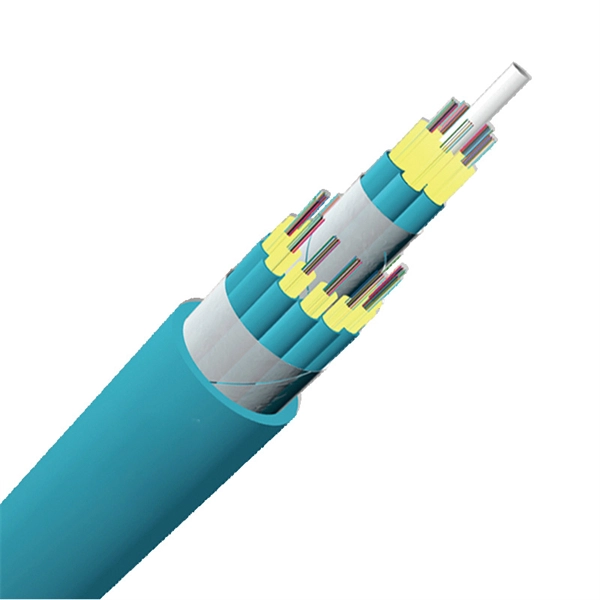
Hollow-Core Optical Fiber
Hollow-Core Optical Fibers offer low latency performance and are on the verge of becoming more applicable for
Why Hollow Core Fiber Is the Next Big Leap in Optical Communication
In the race to transmit data faster, cleaner, and more efficiently, Hollow Core Fiber (HCF) technology is emerging as
Hollow-Core Optical Fibers: Recent Advances and Applications
The domain of hollow-core fibers (HCFs) has witnessed impressive growth and innovation, emerging as a promising field in optical
Hollow-Core Fiber Properties and System-Level Specifications for
Importantly, despite all the advantages of HCF, some drawbacks and uncertainties need to be addressed or properly
Hollow-Core Optical Fibers Offer Advantages at Any Wavelength
As demands on optical fiber performance increase, researchers show that hollow-core fibers may prove useful in the MIR and UV,
Hollow-Core Fiber: Faster, Greener, but Is It Worth the Cost?
Hollow-core fiber promises faster speeds and energy efficiency, but high costs and limited benefits may keep it from
Redefining Fiber Optics How Hollow Core Fiber is Pushing the
Redefining Fiber Optics How Hollow Core Fiber is Pushing the Boundaries By Steve Harris Fiber optics play a crucial role in modern
Hollow Core Fiber – Benefits & Applications | HOLIGHT
In solid core fibers, high-power light can cause nonlinear effects and potential damage to the core material. In

What Are Hollow-Core Fibers?
What Are Hollow-Core Fibers? This is a continuation from the previous tutorial - introduction to miniature and micro-optics. 1.
Hollow-core Fibers and Capillaries
This comprehensive article provides an in-depth overview of hollow-core fibers and capillaries, which are optical waveguides